
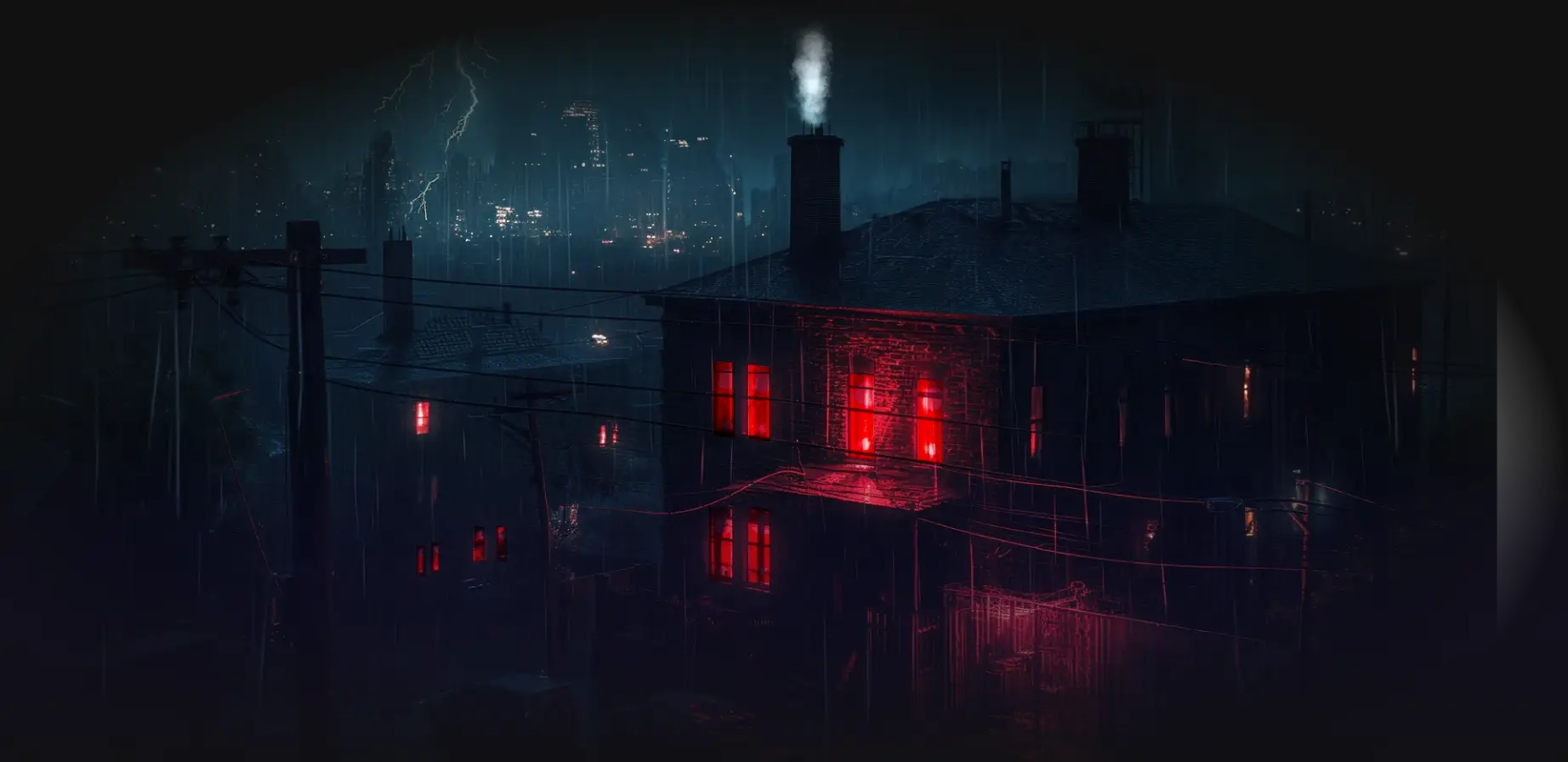
This Is Not the Story You Think It Is.
South England. Summer of 1991. The Eighties are technically over, but nobody’s told the teenagers yet. There’s still that particular feeling in the air, that the future is going to be fine, that things are going somewhere good, that being young and alive and with your friends on a warm Saturday night is basically enough.
Conner and his crew have built a camp behind a series of derelict warehouses the local kids call the Mushroom Farm. Fires by the creek. Cheap cider. Bad music on a ghetto blaster. The specific, irreplaceable feeling of a night that has no obligations attached to it.
That’s what Indigo Swann takes from you first. He makes you feel it. The warmth of it. The carelessness. The way those nights feel infinite when you’re inside them.
Then he ends it.
What Happens?
One brutal night changes everything. Conner doesn’t walk away from it. He goes into a coma and stays there for four years.
What happens to him in that darkness is not a dream. It is not a hallucination. Something is waiting for him there, something ancient, something that has a name and a purpose and a very specific interest in what Conner is going to become. When he finally wakes up, he is not the same person who closed his eyes. He carries something back. Something vast, and dangerous, and real.
The reunion with the world he left should be a miracle. It becomes something far more complicated.
What This Book Actually Is?
Most novels pick a lane. The Mushroom Farm refuses.
It begins as coming-of-age fiction. Specific, textured, nostalgic in the best way. Then it becomes a crime story, a survivor story, a horror story. Then it becomes something that doesn’t fit a clear genre label: a metaphysical thriller where consciousness itself is the battlefield, where the nature of good and evil is genuinely uncertain, where the reader is left with questions that don’t dissolve when the book ends.
This is literary fiction wearing a horror story’s skin. Beneath the violence and the terror and the supernatural strangeness is a serious meditation on free will, belief, trauma, and the possibility that reality is not a fixed thing we live inside, but something we are all, constantly, building together, whether we know it or not.
It earns every content warning it carries. None of what is dark in this book is there for shock. It is there because the story required it. Because honesty required it.
What You Should Know Before You Start?
This book contains graphic violence, sexual assault, disturbing supernatural content, psychological manipulation, and mature themes. It is written for adults. It does not soften what it depicts. It does not resolve into comfort. If you want fiction that challenges your understanding of reality, that uses horror as a vehicle for genuine philosophical inquiry, that refuses to tell you how to feel at the end: this is for you.
